2026 Retrospective
The summer has felt drawn out. The heat seems to linger, creeping closer to the end of October every year. I imagine part of that comes from a winter that brought very little snowfall, leading to a shorter period of runoff at the beginning of the warmer months, ultimately bringing about relatively low flows throughout the fishing season. I can’t say if they’re historically low, but they don’t seem to be as good as previous years.
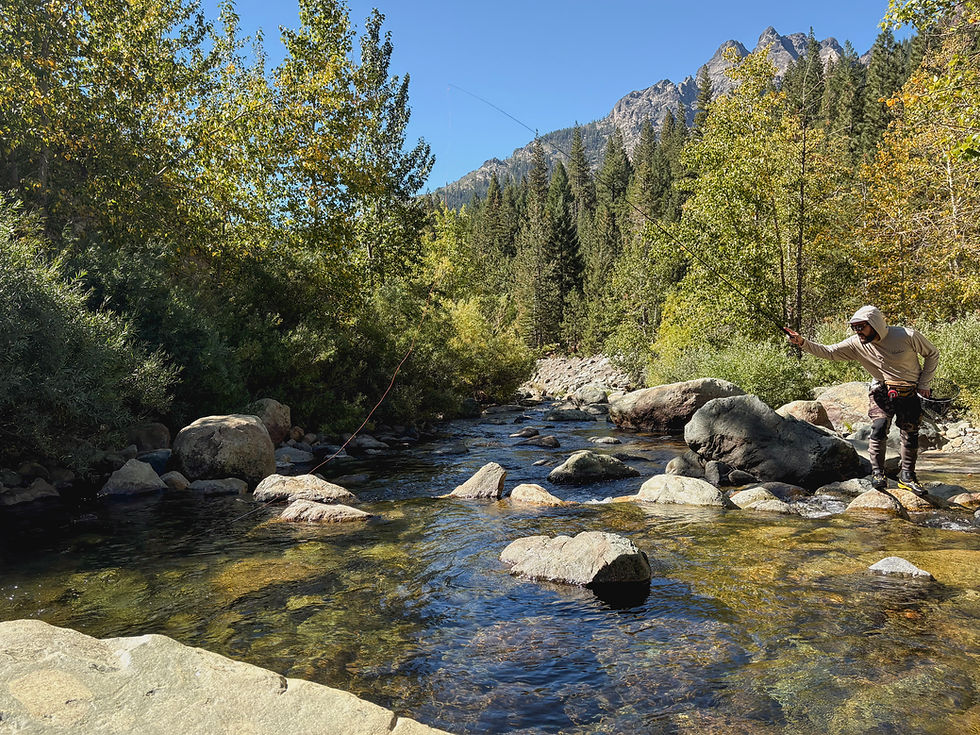
Regardless of the weather and water conditions, I still got to spend some time fishing over the summer months, and now that I’m wrapped up my tenkara fishing for the year, I figured I’d put together a short post that summarizes some of my tenkara fishing experiences in 2026.
Different Paths
I think a good place to start is by addressing the fact that I haven’t been writing for my own personal blog, and instead have been focusing my writing on posts for the Heritage Tenkara Project website. I recently felt more inspiration to return to posting here, and the most recent posts were published after a significant gap of time with “Fortune Cookie” being published at the end of my last string of posts in February of 2025.
In that post, I mentioned feeling a little lost without a particular goal to influence my fishing. I had talked about a few ideas regarding what I wanted to do next, and revisiting the post I now realize I never really followed up on those ideas.
Instead of chasing different species, I ended up on a path of learning to use other tools for trout fishing in rivers and streams. I started fly-fishing with a rod and reel, as well as employing a spinning rod, and trying to utilize my keiryu rod more often. Over the past two years, tenkara was not my only fishing method as I pushed myself to learn and better understand the other styles of trout fishing, while learning technique, as well as observing where I found the other tools to excel and when they didn’t fit the situation.
I feel that I have learned a lot over the past few years, and in some ways it has influenced my tenkara fishing. On the other hand, while I look at the stats I see that I have been utilizing the tenkara rod more this past season than in 2025. I will come back to this and share a bit of my thoughts regarding where I’m at with tenkara later in this post, but first I would like to keep with the tradition of sharing some end-of-season stats!
A Year In Review
In the past I had published a series of posts after October that would detail some stats from the season that had just wrapped up. Being that I’ve been away for a while I figured I could combine all of the stats for 2026 in this post, but I will be skipping 2025. With that said, I’ll start with…
Tenkara Fishing 2026
The fishing this year was good. As it is, fishing with a tenkara rod made up about 40% of my time on the water this year, but brought in 66% of the fish I caught. Looking at it now, I am realizing that I caught more fish on a tenkara rod this year than last year. It also seems like the average size of fish caught is a little higher than last year, but I think this may be skewed a bit by a good day of fishing when attending the Oregon Tenkara Bug Out where I landed my personal best for the year.

Gear for the Year
When it comes to the tools that helped me catch the most fish, I have a few rods to mention. The one that got the most time on the water was the Tenkara Tanuki 375, being used in at least a third of my sessions. Following that, the Riverworks ZX-4 Pro got plenty of time on the river, and brought in the most fish, including the Oregon rainbow trout pictured above.
Flies
When it comes to flies, I still use my “ume” futsu kebari most often. It remains a confidence fly for the more “traditional” side of my tenkara fishing.
Having spent quite a bit of time tight-line nymphing this year, the weighted nymph that brought in the most fish was a “Sexy Walt’s Worm,” having the best catch rate out of any fly in my fly box over the past 6 months. It’s also worth noting that this was the pattern that brought in my personal best as well.

Comparing the Stats
Back in the 2023 and 2024 seasons, I conducted my “Shokuyroshi Experiment” and recorded a bunch of data to compare to my catch rates on 2020 and 2021 in hopes to increase it as much as I could. Following the experiment, I wondered if I would maintain the same habits and catch rates with a tenkara rod over time, and as I’m comparing the numbers from the past two years, I am seeing a decrease in my fish per hour, and fish per session numbers. This is to be expected considering my focus has taken me away from tenkara a bit, but also my goal in 2026 may have contributed to that decreasing catch rate in a way.
New Goals, New Water
As for new goals, my main focus this year was fishing different spots, and with that there are a few overlapping parts of this goal. First off, I wanted to try to fish at least 26 different sections of water. This would mean I could hit a new spot every other week throughout the year. This could mean a new stream, or just a different section of a river that I’ve fished before, the main objective was to not fish the same section of water over and over again. As of the time writing this, I have fished 33 different sections of water on 10 different rivers or streams. It may not be a lot, but it’s been more exploring this year than any other year prior.
Along with fishing different sections of water, I wanted to push myself to fish at least six “new” spots. At this point, I have recorded 18 spots from this year that I had not fished before. No doubt, the Oregon Tenkara Bug Out definitely helped increase that number, but another factor is another ongoing goal/project that I started this year.
In the springtime, I felt inspired to try to fish as much of one of my local rivers as I could. I knew there would be some limitations due to private property that limits access to certain sections, but I figured I would at least start chipping away at it. With that said, this project isn’t limited to tenkara, as this river offers a diversity of terrain, with a lot of water to cover.
As it is, none of my goals for fishing this year were really made with tenkara specifically in mind. Regardless, I did use a tenkara rod to fish plenty of new water, and even tackled some rivers and streams that are considered “tough fishing” due to selective trout - and found success with a tenkara rod. This brings me back to where I’m currently at with tenkara.
Tenkara Fishing and Practices
I’ve enjoyed learning and fishing with different tools. One thing I have seen is the expansion of gear related to the different styles, and also what seems like a little bit of overcomplication. Of course, some of this may stem from the whole ideology that drew me to tenkara to begin with. Some of it may be due to philosophical interests that have drawn my interest earlier this year. Either way, I see myself coming back to the simplicity and efficiency that tenkara offers.
Even as it pertains to tenkara, I don’t find myself using some of the tactics I utilized in trying to increase my catch rate as often. I don’t use my little bobbers as often as I had in the past, and I don’t use my tungsten putty much anymore either. Maybe that is due to becoming more comfortable with tight-line nymphing, but even now I don’t utilize nymphing as much.
I’m finding more joy in a more simple approach. I enjoy casting a kebari with a well-designed tenkara rod. I enjoy sections of river now that bring some variety in the way we approach spots that are likely to hold trout, and with that a call for more creative casting so that I can present the fly in different ways depending on the features of the river.
Don’t get me wrong, I enjoy experimenting with different ideas still. I think the more we experience and learn, the better we become as anglers. I spent a good portion of time experimenting with different tenkara-related ideas this year, and maybe that contributes to the decline in fish per hour. I still learned a lot, and have started to refine some new skills. Regardless, I still find joy in just a simple approach to fishing, and to me, tenkara still offers the most “pure” fishing experience.